
Surface Treatment Solutions for Stainless Steel Vibratory Bowl Feeders
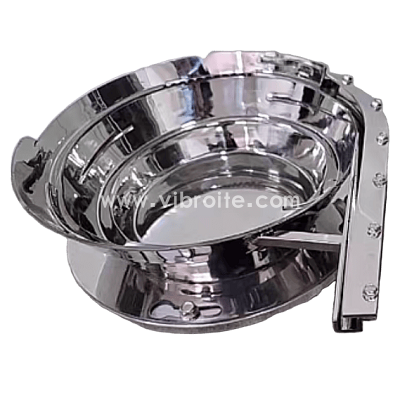
In automatic feeding systems, the surface treatment of a vibratory bowl feeder directly affects feeding stability, noise control, product protection, and service life.
304 stainless steel vibratory bowls are widely used due to their excellent corrosion resistance and mechanical strength.
Different surface treatment solutions can be selected according to material characteristics and application requirements.
This article introduces seven common surface treatment solutions for 304 stainless steel vibratory bowl feeders based on practical project experience.
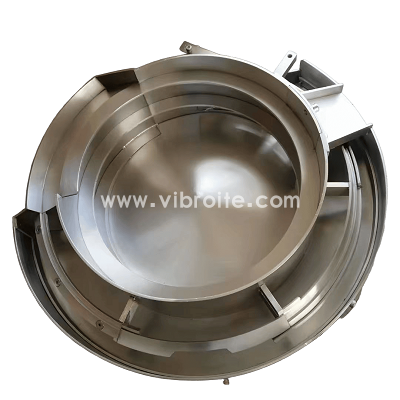
Polished Surface Treatment
Mechanical polishing is applied to achieve a smooth surface and reduce friction during feeding.
Advantages & Features
•Smooth surface for stable feeding•Less material accumulation, easy to clean
•Cost-effective and widely used
Applications
•Metal parts and standard hardware
•General-purpose automatic feeding systems
Polished & Brushed Finish
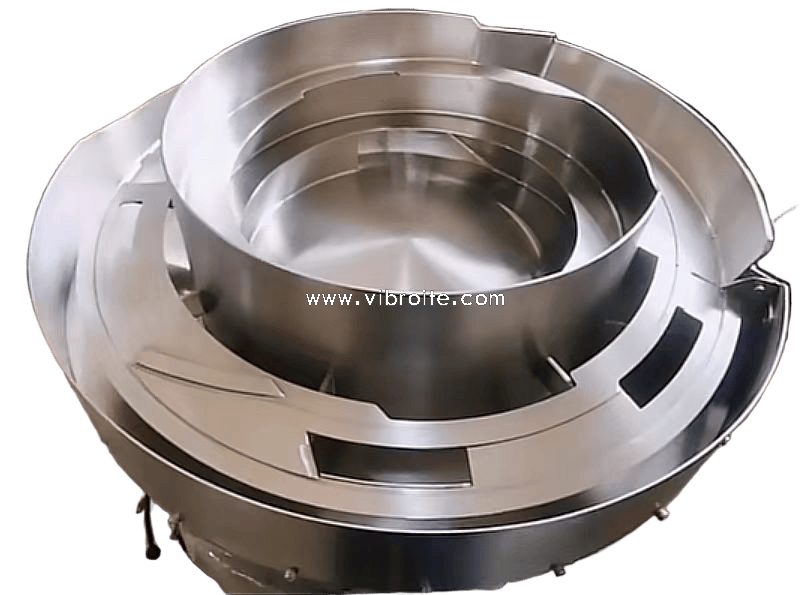
Polished & Brushed Finish
A brushed texture is added after polishing to balance smoothness and friction.
Advantages & Features
•Balanced surface smoothness and friction
•Reduced glare for better visual control
•Durable surface with industrial appearance
Applications
•Precision metal components
•Applications requiring stable part orientation
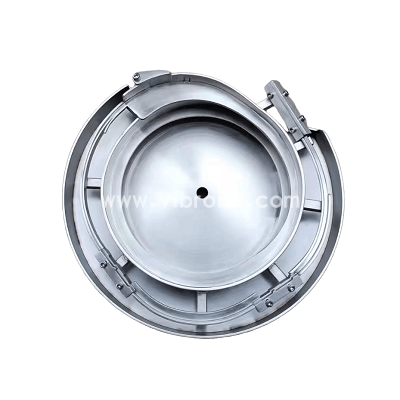
Sandblasted Surface Treatment
Sandblasting creates a uniform matte surface to increase friction.
Advantages & Features
•High friction coefficient
•Prevents slipping and bouncing
•Durable matte finish
Applications
•Small and lightweight parts
•Components prone to sliding or rolling
Mirror Polished Surface Treatment
Mirror polishing achieves an ultra-smooth, high-gloss surface finish.
Advantages & Features
•Extremely low friction
•Clean surface with minimal residue
•Easy to clean and maintain
•Premium appearance
Applications
•Medical and food industries
•High-cleanliness and high-appearance requirements
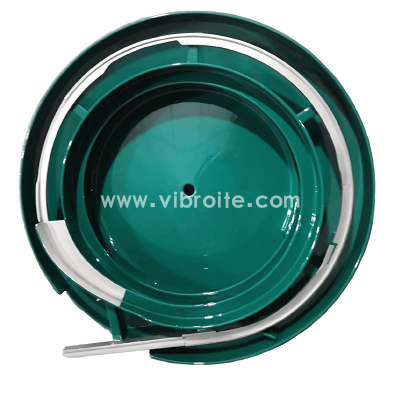
PU (Polyurethane) Coating
PU coating provides a flexible and wear-resistant surface layer.
Advantages & Features
•Excellent cushioning and wear resistance
•Significant noise reduction
•Protects sensitive part surfaces
Applications
•Plastic parts and precision components
•Noise-sensitive production lines
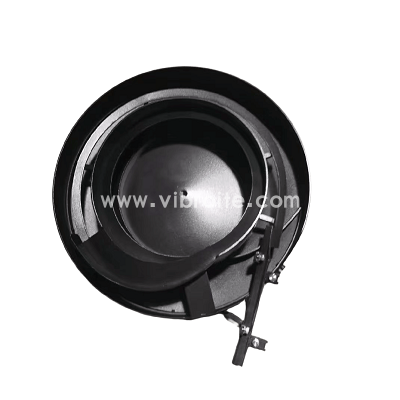
Teflon / PTFE Coating
Teflon (PTFE) coating provides an ultra-low friction and anti-stick surface.
Advantages & Features
•Extremely low friction coefficient
•Excellent anti-stick performance
•Easy to clean and chemically resistant
Applications
•Rubber and silicone parts
•Sticky or soft materials
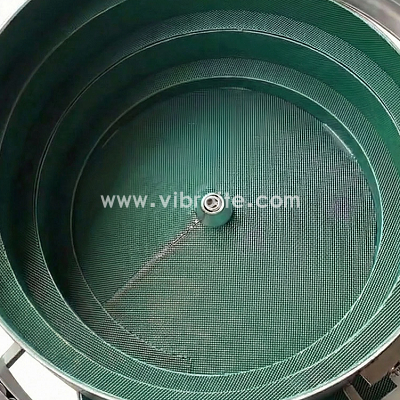
Anti-Slip Fabric / Noise-Reducing Liner
Anti-slip fabric or noise-reducing liners are applied to contact areas of the feeding track.
Advantages & Features
•Significant noise reduction
•Improved feeding stability
•Soft surface prevents scratches
•Wear-resistant and easy to replace
Applications
•Noise-sensitive production environments
•Surface-sensitive or fragile components
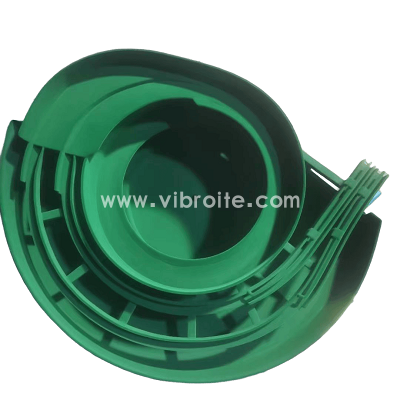
Flocking Surface Treatment
Flocking treatment adds a soft fiber layer to protect sensitive parts.
Advantages & Features
•Excellent surface protection
•Noise reduction
•Gentle handling of parts
Applications
•High-gloss components
•Cosmetic and decorative parts
Selecting the appropriate surface treatment is essential to ensure long-term stable operation of vibratory feeding systems.
Suzhou Vibrant Automation Co., Ltd. offers flexible combinations of metal finishing, coating, and soft lining solutions to deliver stable, durable, and low-noise automatic feeding systems.